The short answer
A heat pump blowing cool air in winter is usually running a normal defrost cycle: 5 to 15 minutes of cooler air, steam rising from the outdoor unit, then warm air again. It is a real problem when cold air lasts longer than that, the outdoor coil stays encased in ice, or auxiliary heat runs nonstop.
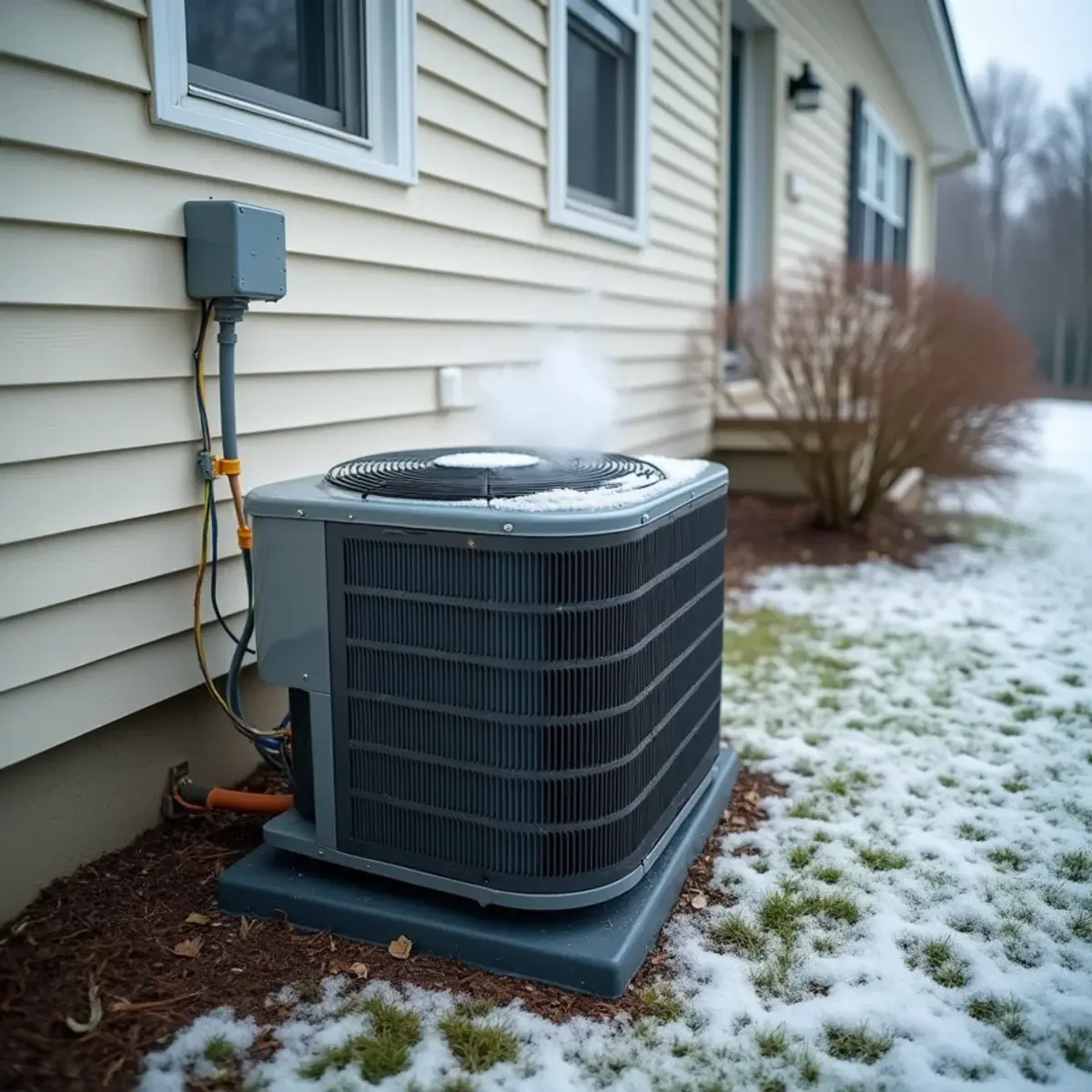
A heat pump that blows cool air for a few minutes on a cold, damp day is almost always running its defrost cycle, which is normal. Look outside: if the outdoor fan has stopped and steam is rising off the unit, that is defrost, and warm air should return within about ten minutes. Cool air that lasts longer than fifteen or twenty minutes, an outdoor unit sealed in solid ice, or a fan that never restarts points to a real problem that needs a technician.
Electricity is Lancaster County's most common heating fuel, at 37.2% of homes, and much of that is heat pumps. In Mount Joy, most of them sit beside the townhomes and singles built in Florin Hill since 2000, and many of those units are now old enough to start showing their age.
Why Heat Pump Air Never Feels Hot
Owners who grew up with a gas furnace often think a working heat pump is broken. A furnace pushes air at the registers that feels hot to the hand. A heat pump delivers a larger volume of gentler air, often in the 90s, which is warmer than the room but cooler than your skin. Hold your palm over a register and it can feel almost cool even while the system is heating normally.
The test is the thermostat, not your hand. If the house holds its setpoint and the system cycles off now and then, the heat pump is doing its job.
How the Defrost Cycle Works
In heating mode, the outdoor coil is colder than the outside air, because that is how it pulls heat out of the air. When the air is near freezing and humid, moisture freezes onto the coil fins. Lancaster County winters are damp, so the worst frosting happens on raw days between about 25°F and 40°F, not on the bitter, dry nights.
Frost blocks airflow, so the system clears it on a schedule. Here is what happens during a defrost:
- The defrost control board, using a temperature sensor on the outdoor coil, decides the coil needs clearing.
- The reversing valve shifts the system into cooling mode for a few minutes, sending hot refrigerant to the outdoor coil. You may hear a loud whoosh as it switches.
- The outdoor fan stops so the heat stays on the coil. Steam rises as the frost melts, which some owners mistake for smoke.
- Indoors, the backup electric heat strips normally come on to temper the air, but the air can still feel cooler for a few minutes.
- When the coil is clear, the valve shifts back, the outdoor fan restarts and normal heating resumes.
A defrost typically takes a few minutes and may repeat every 30 to 90 minutes of run time in frosty weather. Water dripping from the unit afterward is meltwater and is expected.
Ice on the Outdoor Unit: Normal or Not
A light white coating of frost that disappears after each defrost is normal. Ice that keeps building is not. Use this as a guide:
| What you see | Likely meaning |
|---|---|
| Thin white frost on the coil that clears every hour or so | Normal operation in damp winter weather |
| Steam and dripping water for a few minutes, fan stopped | Normal defrost cycle |
| Clear, thick ice covering the whole coil, not melting | Defrost failure: board, sensor or reversing valve |
| Ice packed on the top grille or around the fan blade | Problem: often a gutter dripping onto the unit, or a failed defrost |
| Ice building up from the bottom of the cabinet | Poor drainage, or the unit sitting too low in snow |
| Frost on one part of the coil only | Possible low refrigerant charge from a leak |
Do not chip at the ice, hose it or pour hot water on it. The aluminum fins and refrigerant tubing bend and puncture easily. Switch the thermostat to emergency heat and call for service instead.
Auxiliary Heat and Emergency Heat Are Not the Same
Most heat pumps in this area have electric heat strips in the indoor air handler, or a gas furnace in a dual fuel setup. The thermostat uses that backup in two different ways.
- Auxiliary heat (Aux) is automatic. The thermostat adds backup heat during defrost, after a large setpoint increase, or when the heat pump alone cannot keep up. The heat pump keeps running alongside it.
- Emergency heat (Em Heat) is manual. You select it, and it locks out the outdoor unit completely, so the house heats on backup alone.
Seeing Aux come on during a January cold snap below 20°F is normal for many older heat pumps, which lose capacity as the temperature falls. Aux running constantly on a 40°F day is not, and it shows up quickly on the PPL bill because electric strips cost far more to run than the heat pump. Use emergency heat only when the outdoor unit is iced over, damaged or not running, and switch back once it is repaired.
Faults That Really Do Cause Cold Air
When cool air keeps coming well past a normal defrost, a technician usually finds one of these:
- Reversing valve stuck in cooling after a defrost, so the system cools the house steadily.
- Failed defrost board or coil sensor, letting ice build until the unit can barely move heat.
- Refrigerant leak, which drops capacity and frosts the coil unevenly. Repairs require EPA Section 608 certification.
- Bad capacitor or contactor in the outdoor unit, so the compressor or fan never starts while the indoor blower keeps moving room air.
- Tripped breaker for the heat strips, so defrost cycles feel icy because no backup heat comes on.
- Wrong thermostat wiring, very common after a do-it-yourself smart thermostat install. If the reversing valve setting is backward, the heat pump cools when asked to heat.
Quick Checks Before You Call
- Confirm the thermostat is on Heat and set a few degrees above room temperature.
- Replace a dirty filter, since low airflow makes heat pump air feel even cooler.
- Clear snow and drifts at least a foot back from the outdoor unit, and look for a gutter dripping onto it.
- Check both breakers: one for the outdoor unit, one for the air handler and heat strips. Reset a tripped breaker once only.
If the indoor unit is also blowing nothing warm, our list of what to check when there is no heat covers the whole system.
From the service calls
How a technician tells a defrost fault from a refrigerant problem
From inside the house, three different problems feel the same: cool air at the vents. At the outdoor unit they look different, and that is where the diagnosis starts.
- Frost pattern. Even frost across the whole coil that clears completely in a defrost is normal. Ice only on the lower rows, or a coil that frosts in patches, points to a low refrigerant charge or a restriction, not the defrost controls.
- A forced defrost. Most defrost boards let a technician start a defrost on demand. The reversing valve should shift, the outdoor fan should stop and the coil should clear within minutes. If it never starts or never ends, the board, the coil sensor or the valve is suspect.
- What the backup heat does during defrost. Many systems turn on a stage of electric heat while defrosting so the air inside does not go cold. If that stage is miswired or its breaker is off, every defrost becomes a blast of cold air, even though the heat pump is healthy.
Each of those has a different fix and a different price, which is why a heat pump repair visit should include watching a full defrost, not just reading the thermostat.
When to Get a Technician Out
Call (321) 478-0693 if the cold air outlasts a normal defrost, ice keeps building, or Aux never shuts off. Calls are answered 24/7, and we send a local HVAC technician for heat pump repair, with the price given before work starts. If the house is losing temperature fast on a frigid night, our emergency HVAC repair page explains how after-hours calls work.
A typical call from the subdivisions around Elizabethtown and West Donegal Township or the Londonderry townships near Palmyra sounds like this: a 2006 heat pump, a frosty morning, a thick block of ice on the coil and an electric bill that doubled. That is usually a defrost board or sensor, and catching it early keeps the strips from carrying the house all winter.
Quick answers
Should I cover my heat pump outdoor unit in winter?
No. A heat pump runs all winter and needs free airflow through the coil, so a full cover traps ice and can damage the unit. A small overhang or a gutter repair to keep roof water off the top is fine. Just keep snow, leaves and shrubs at least a foot away from all sides.
Is a cold-climate heat pump worth it in Lancaster County?
For many homes it is a good fit. Cold-climate models hold far more of their heating capacity in the teens and single digits, which means less time on electric backup during January cold snaps. Look for the HSPF2 rating and the model's capacity at 5°F, and pair the choice with a proper Manual J load calculation.
Why does my heat pump run nonstop on very cold days?
When the outside temperature drops below the point where the heat pump can match the house's heat loss, long or continuous run times are normal. The system is designed to run steadily rather than in short bursts. It only signals a problem if the house cannot hold temperature or the outdoor coil stays iced.
Services mentioned in this guide
Heat Pump Repair and Replacement
Iced-over outdoor unit, cool air at the vents or a thermostat stuck on aux heat? We send a local technician to diagnose defrost boards, reversing valves, capacitors and refrigerant leaks, then price the fix before work starts. For Florin Hill-era units near 20 years old, we lay out cold-climate and dual fuel replacement options.
Heat Pump Repair in Mount JoyEmergency HVAC Repair (24/7)
No heat at 2 a.m. in January or a dead air conditioner during a July heat wave? A real person answers 24/7, sends a local HVAC technician for furnaces, heat pumps, boilers and central air, and gives you the price before any work starts, including any after-hours rate.
Emergency HVAC in Mount Joy