The short answer
A fall furnace maintenance checklist for Lancaster County covers a new filter, a thermostat test in heat mode, clear vents and returns, fresh carbon monoxide alarm batteries, and the oil tank or boiler pressure gauge. Then book a professional tune-up for combustion, safety controls and the heat exchanger before the first freeze, ideally in September or October.
A good fall furnace maintenance checklist splits into two lists. Homeowners can change the filter, test the thermostat and carbon monoxide detectors, clear vents and returns, read the oil tank and boiler gauges, bleed hot water radiators and clear leaves from a heat pump. Anything involving burners, gas valves, wiring or combustion testing belongs to a technician during a tune-up. Do both before the first cold week in Lancaster County, not during it.
Why October matters more here than in milder places
Central Pennsylvania heating seasons tend to start politely and then turn hard. A mild October lets a weak igniter or a clogged oil nozzle limp along, and then the first January cold snap below 20°F asks the system to run for hours without a break. That is when marginal parts fail and contractors are busiest.
Mount Joy also has two very different kinds of equipment to get ready. About a quarter of the homes along Main Street and in Florin were built before 1940 and still run boilers with radiators, many on oil. Another quarter went up after 2000, led by Florin Hill, where builder-grade gas furnaces and heat pumps are now 15 to 25 years old. The checklist below covers both.
Homeowner tasks for every system
- Replace or wash the air filter. Forced-air systems only. Slide the old one out, note the size and airflow arrow, and put in a clean one. A filter loaded with summer dust makes a furnace overheat and trip its high-limit switch.
- Test the thermostat. Switch to heat and raise the setting a few degrees above room temperature. The system should start within a few minutes. Replace thermostat batteries now if it uses them.
- Open and clear vents and returns. Move rugs, beds and couches off supply registers and away from return grilles.
- Test carbon monoxide detectors. Press the test button on every unit. You want one on each level and near the bedrooms. Most detectors have an end-of-life date printed on the back; replace any that are past it.
- Clear the area around the equipment. Keep paint cans, laundry, cardboard and gasoline away from the furnace, boiler and water heater.
If a detector sounds or you smell gas
Get everyone out of the house first. Call 911 from outside, then call UGI or your propane supplier. Do not flip switches or try to find the source. Our guide to carbon monoxide warning signs from a furnace or boiler explains the symptoms to watch for.
Extra checks for oil heat and boilers
Fuel oil still heats about 13.8% of Lancaster County homes, and a lot of them are farm properties in the townships around Manheim, Mount Joy and Elizabethtown where the gas main never reached. If your home heats with oil, a few added items go on the list.
Read the oil tank gauge
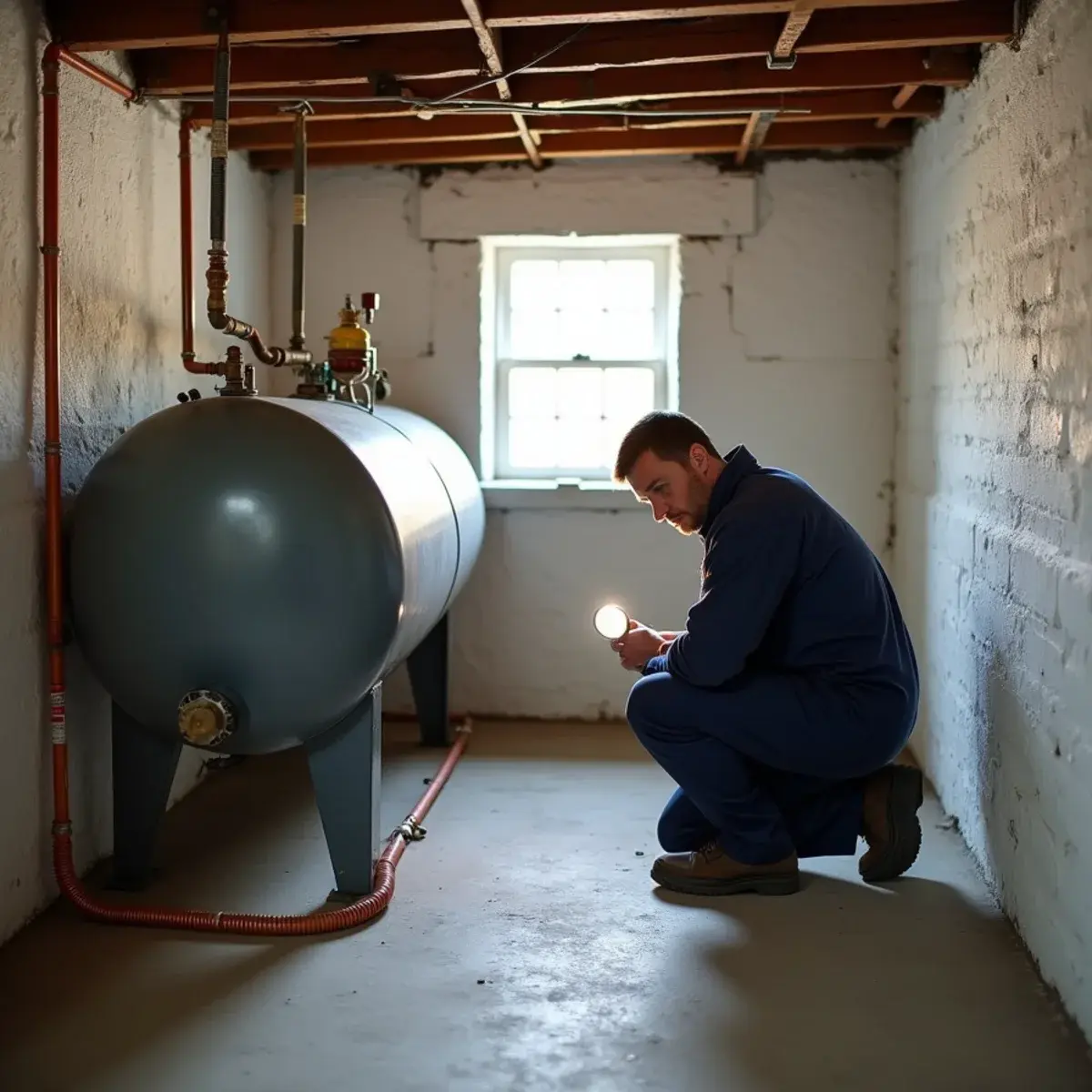
The float gauge on top of the tank shows roughly how full it is. Schedule a delivery before it drops low, because running a tank dry can pull sediment into the filter and nozzle and leave you with a burner that will not stay lit. While you are there, look for wet spots, rust streaks or a fuel smell around the tank and lines, and report anything you find.
Check the boiler pressure gauge
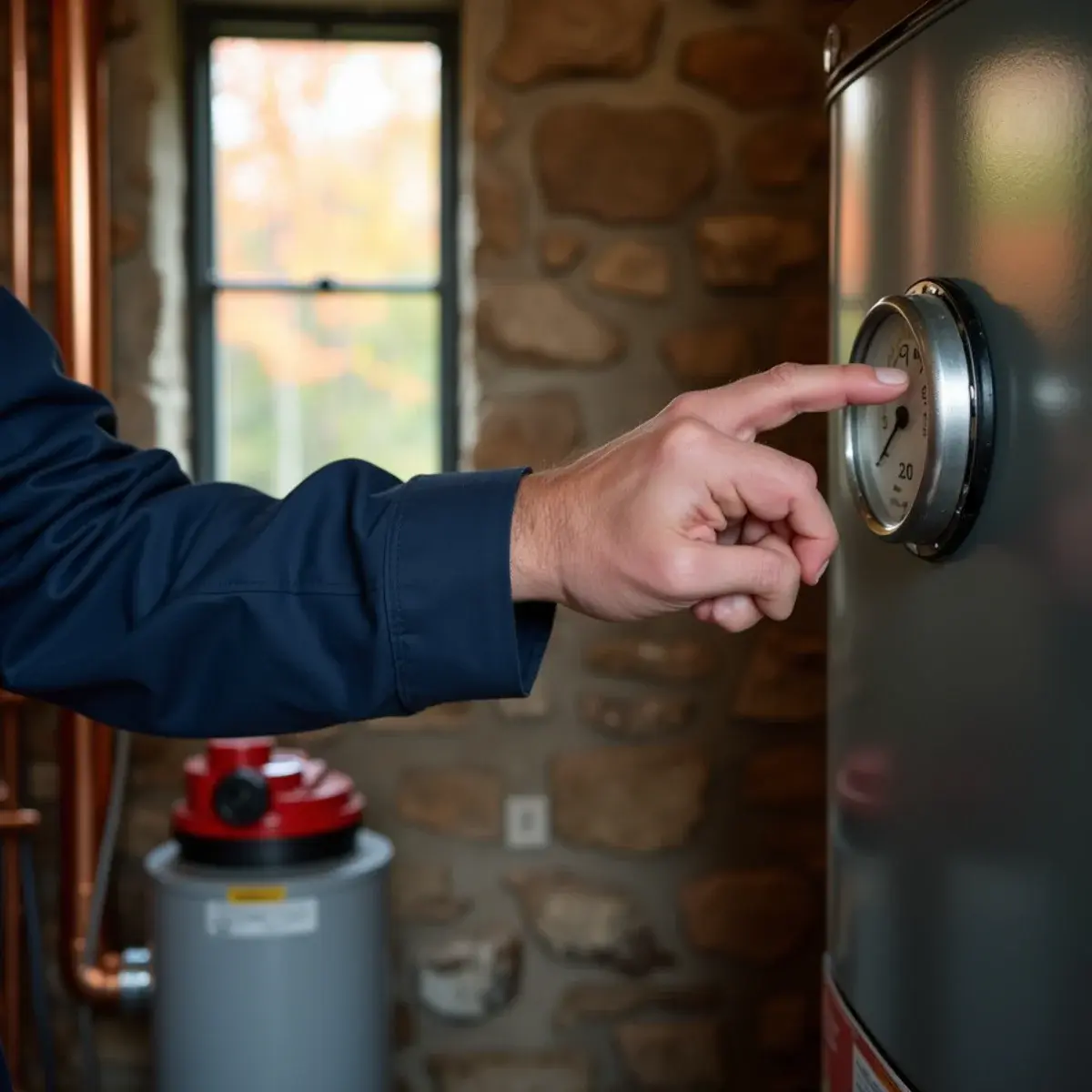
A hot water boiler has a combination pressure and temperature gauge. Cold, most residential systems sit somewhere around 12 to 15 psi, though your installer's tag may say otherwise. If the needle is well below that, or climbs toward the 30 psi mark where the relief valve opens, call for service rather than adjusting fill valves yourself. Steam boilers have a glass sight tube instead; the water should be visible about halfway up.
Bleed hot water radiators safely
Radiators that are warm at the bottom and cold at the top usually have trapped air. Turn the thermostat down and let the system cool, then hold a rag and a cup under the small bleed valve and open it a quarter turn with a radiator key. Close it as soon as water appears. Start on the lowest floor and work up. Steam radiators are different: their vents are not meant to be opened by hand, so leave those to the technician.
One press only on the oil burner reset
If an oil burner locks out, press the red reset button once. If it fails to start or locks out again, stop and call. Repeated resets can flood the combustion chamber with oil.
Getting a heat pump ready for winter
Most Florin Hill homes and many newer townhomes heat with a heat pump, which runs nearly every day from November to March. Rake leaves, mulch and grass clippings away from the outdoor unit and keep about two feet of clear space on all sides. Make sure a downspout or roof edge is not dripping onto it, since that water freezes into a block of ice in January. Do not wrap or cover the unit for winter; it needs open airflow to heat. If yours struggled last season, our heat pump repair page explains defrost, auxiliary heat and the common faults.
What a professional tune-up includes
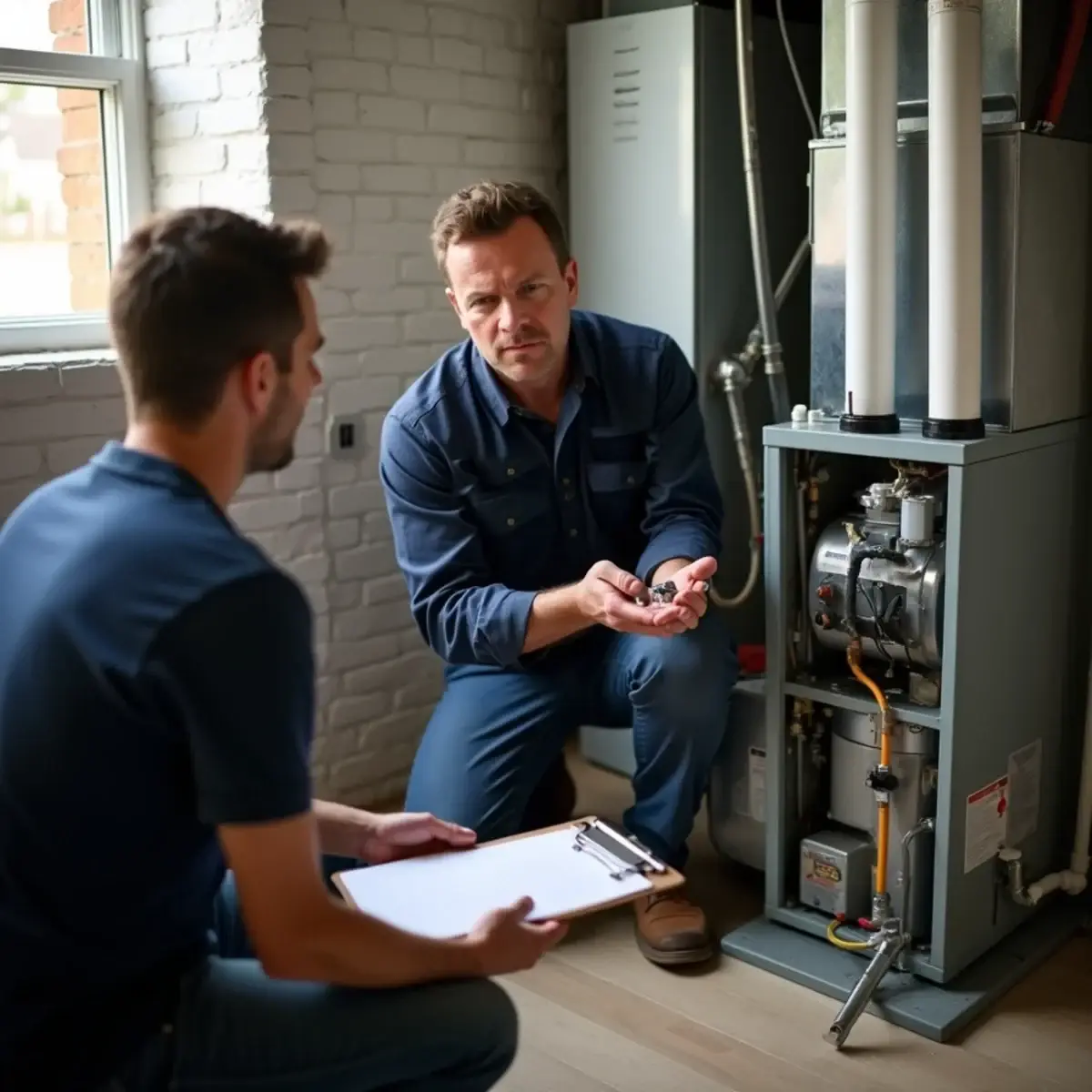
The work differs by fuel. Ask the technician what will be tested before they start.
| System | What the technician checks |
|---|---|
| Gas or propane furnace | Igniter and flame sensor, burners, inducer motor and pressure switch, gas pressure, temperature rise, heat exchanger inspection, flue draft and a carbon monoxide test, blower and wiring, condensate trap on high-efficiency units |
| Oil furnace or oil boiler | New nozzle and oil filter, pump strainer, electrode setting, combustion analysis and smoke test, cleaning of heat exchanger passages, barometric damper and chimney connection |
| Hot water or steam boiler | Low-water cutoff test, relief valve, expansion tank, circulator and zone valves, system pressure or steam pressure control, sight glass, visible leaks at pipes and radiators |
| Heat pump | Refrigerant pressures, defrost cycle and defrost board, reversing valve, capacitor and contactor, auxiliary heat strips, outdoor coil condition |
If you would rather have one visit cover everything, ask for furnace repair and tune-up service for forced air, or boiler and oil burner service for radiator heat. Every HVAC technician we send is licensed where Pennsylvania requires it, and insured, and you get the price before the work starts.
Tasks to leave alone
Some fall chores show up in online checklists that homeowners should skip. Do not remove the furnace burner cover, clean the flame sensor yourself, adjust the gas valve, change the oil nozzle or open electrical panels inside the equipment. Do not drain or refill a boiler or flush a low-water cutoff unless a technician has shown you how on your specific unit. And if a breaker trips twice, leave it off and call, because a breaker that keeps tripping is reporting a real fault.
From the service calls
Run a test heat cycle before the first cold night
The most useful fall check takes ten minutes, and most homeowners skip it until the first frosty morning, when every HVAC phone in the county is ringing. On a mild day in late September, set the thermostat to heat, a few degrees above room temperature, and watch the first cycle.
- Gas or propane furnace: the inducer hums first, the burners light within a minute or two, and the blower follows shortly after. Warm air should reach the registers within a few minutes.
- Oil furnace or boiler: the burner should fire on the first try with no puffs, rumbles or smoke smell. Radiators should warm within the hour, starting closest to the boiler.
- Heat pump: switch to heat and confirm the outdoor unit runs and the air at the vents is noticeably warmer than the room.
- The smell: a faint dusty smell for 10 to 15 minutes is dust burning off. A smell that lingers, or any gas or electrical odor, is not normal.
If the home has a whole-house humidifier on the furnace, replace the water panel, open the bypass damper for winter and start the humidistat around 30 to 40% so windows do not sweat. Anything that fails the test run is easier to fix in October than in January. Book furnace repair or boiler service while the schedule is still open.
When to call before the cold arrives
Call if the system will not start on the thermostat test, if the oil burner needs more than one reset, if radiators stay cold after bleeding, if the boiler gauge is out of range, or if you notice soot, a fuel smell or a yellow flame. Homes in Manheim, Rapho and Penn townships with oil or propane heat should book early, because fuel deliveries and burner service both get crowded once frost arrives; see our Manheim heating and boiler service page for that area. If the heat quits outright, start with our no-heat troubleshooting guide, then call (321) 478-0693. Calls are answered 24/7, and we send a local HVAC technician who gives you the price before any work begins.
Quick answers
How often should a furnace or boiler get a tune-up?
Once a year, in early fall, is the usual recommendation for gas furnaces and boilers. Oil-fired equipment benefits most from yearly service because the nozzle and filter wear and soot builds up on heat exchanger surfaces. Heat pumps that run year-round can be checked in fall for heating and again in spring for cooling.
How often should I change my furnace filter in winter?
Thin one-inch filters usually need changing every one to three months during heating season, and more often with pets or nearby construction dust. Thicker four- or five-inch media filters can last six months or longer. Hold the filter up to a light: if you cannot see through it, replace it.
Should I turn off an old furnace pilot light over the summer?
Most modern furnaces have electronic ignition and no standing pilot, so there is nothing to turn off. On older units with a standing pilot, relighting should follow the instructions on the unit label, and if you are not comfortable doing it, have a technician relight and check it during the fall tune-up.
Services mentioned in this guide
Furnace Repair
Gas, oil or propane, a furnace that will not light or keeps blowing cold air gets a real diagnosis: igniter, flame sensor, inducer, oil burner or controls. A local technician explains the fault, gives the price before work starts, and checks for carbon monoxide risk before the heat goes back on.
Furnace Repair in Mount JoyBoiler Repair and Oil Heat Service
Hot water and steam boiler repair for Mount Joy's older homes: cold radiators, leaks, banging pipes, failed circulators and stuck zone valves. Annual oil burner service with a new nozzle, filter and combustion test, plus straight advice on when a tired boiler should be repaired, replaced or converted. Calls answered 24/7.
Boiler Repair in Mount JoyHeat Pump Repair and Replacement
Iced-over outdoor unit, cool air at the vents or a thermostat stuck on aux heat? We send a local technician to diagnose defrost boards, reversing valves, capacitors and refrigerant leaks, then price the fix before work starts. For Florin Hill-era units near 20 years old, we lay out cold-climate and dual fuel replacement options.
Heat Pump Repair in Mount Joy